What Google Thinks You Are: I Ran a 5-Day Experiment on My Ad Profile
I gave two fresh Google accounts different lives and left one alone. Five days later, the profiles were unrecognizable. The control didn't move.
A few weeks ago I wrote about algorithmic identity. The idea that platforms don't just track you, they build a version of you. A profile that decides what you see, what gets recommended, what ads follow you around. You never chose it. You can't edit it. And it shapes your reality more than most people realize.
That essay was the "why." This is the "does it actually work."
I wanted to prove something specific: that the algorithmic profile platforms build about you is not set in stone. That it's malleable. That a few days of deliberate browsing can reshape what Google thinks you care about, what YouTube recommends, what products get pushed at you. And that if you stop browsing, the profile freezes completely.
So I set up three clean Google accounts, gave two of them fake browsing habits, left one alone, and tracked what Google's ad profile did over five days.
The results were more dramatic than I expected.
The setup
Three brand new Google accounts. Same demographics, born 1990. Each one running through a different static residential proxy in a different US city. Mesa, Arizona. West Rancho Dominguez, California. Charlotte, North Carolina. Three separate IP addresses that look like three regular people sitting at home on their couches.
Each account got its own isolated Chrome profile. No shared cookies, no shared storage, no cross-contamination. If Google learned something about one account, it was because of what that account did. Nothing else.
The roles:
The Fisherman. This account searched for bass fishing gear, watched YouTube videos about tackle and technique, visited fishing shops and outdoor retailers, browsed fishing gear on Amazon and Temu. A person who really, really cares about catching fish.
The Fitness Guy. Running shoes, protein powder reviews, marathon training plans, gym equipment comparisons. YouTube videos about form and nutrition. Shopping for supplements and running gear. Someone training for something.
The Control. Created the account. Did nothing. Logged in, sat there, never searched for anything, never watched anything, never visited a single website. The whole point of a control is to prove that any changes in the other accounts were caused by the browsing activity and not by some background process Google runs on all accounts.
Each day, the active accounts ran a session: Google searches, YouTube video watching, website visits, shopping activity on Amazon and Temu. Then I scraped all three accounts' Google Ad Center pages to see what Google showed for each account.
Creating three Google accounts was absurdly hard
The first account went fine. Fresh Chrome profile, residential proxy, prepaid SIM for phone verification. Ten minutes.
Then Google flagged the machine. Every subsequent attempt got rejected. Different proxy, different phone number, different everything. Didn't matter. Google had fingerprinted the device and decided it was done handing out accounts. The second and third accounts had to be created from a completely different device.
The irony of building a privacy tool and getting stopped cold by Google's identity verification was not lost on me.
The results
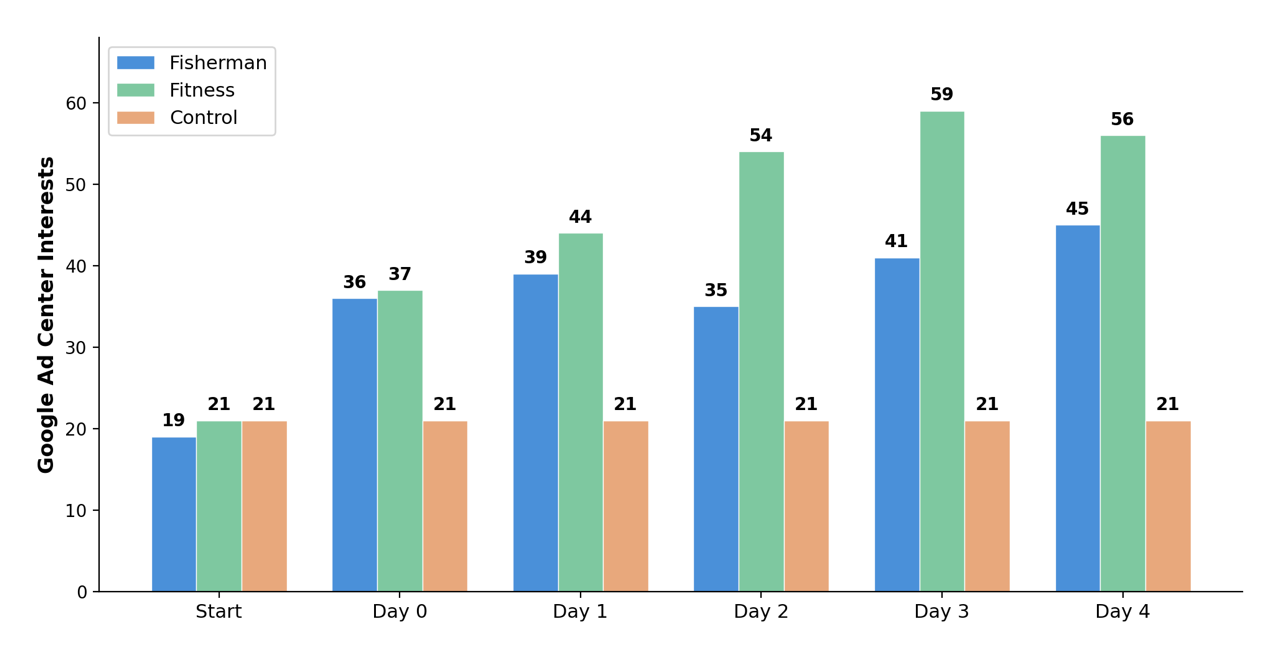
Here's the raw count of items on each account's Google Ad Center page, every day:
A note on what this counts: each number is everything that account's Ad Center page showed that day, topics, brands and ads together, not only the topics Google lists as interests. MirrorMask now reads only an account's own topics. The shift is still real, as the screenshots below show.
Let me walk through what actually happened, because the numbers alone don't capture it.
Day 0 was immediate. One session. 17 new items appeared. In a single afternoon, the page went from knowing nothing to 36 items about this person.
Day 1 was the surprise. The fisherman's count went from 36 to 39, but 10 items had been removed and 13 added. Google isn't stacking up a list. It's rewriting the profile. Removing things it no longer believes, adding new ones. Active sculpting, not passive accumulation.
Day 2 was where fitness exploded. 20 items added, 10 removed. Google had decided this person was serious about fitness and was aggressively reshaping the profile to match. Meanwhile the fisherman dropped from 39 to 35. Google was still deciding what this person really cared about.
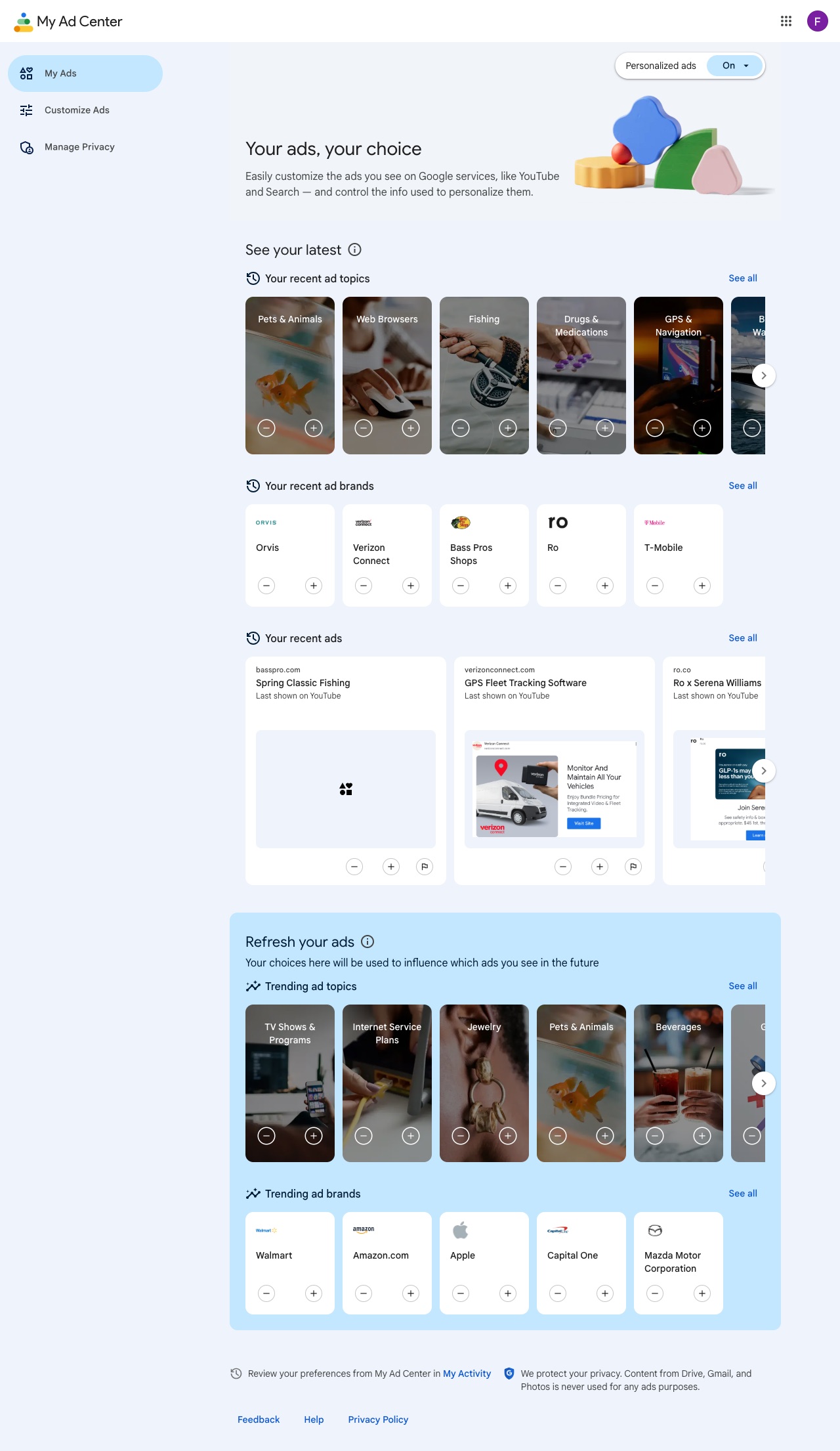
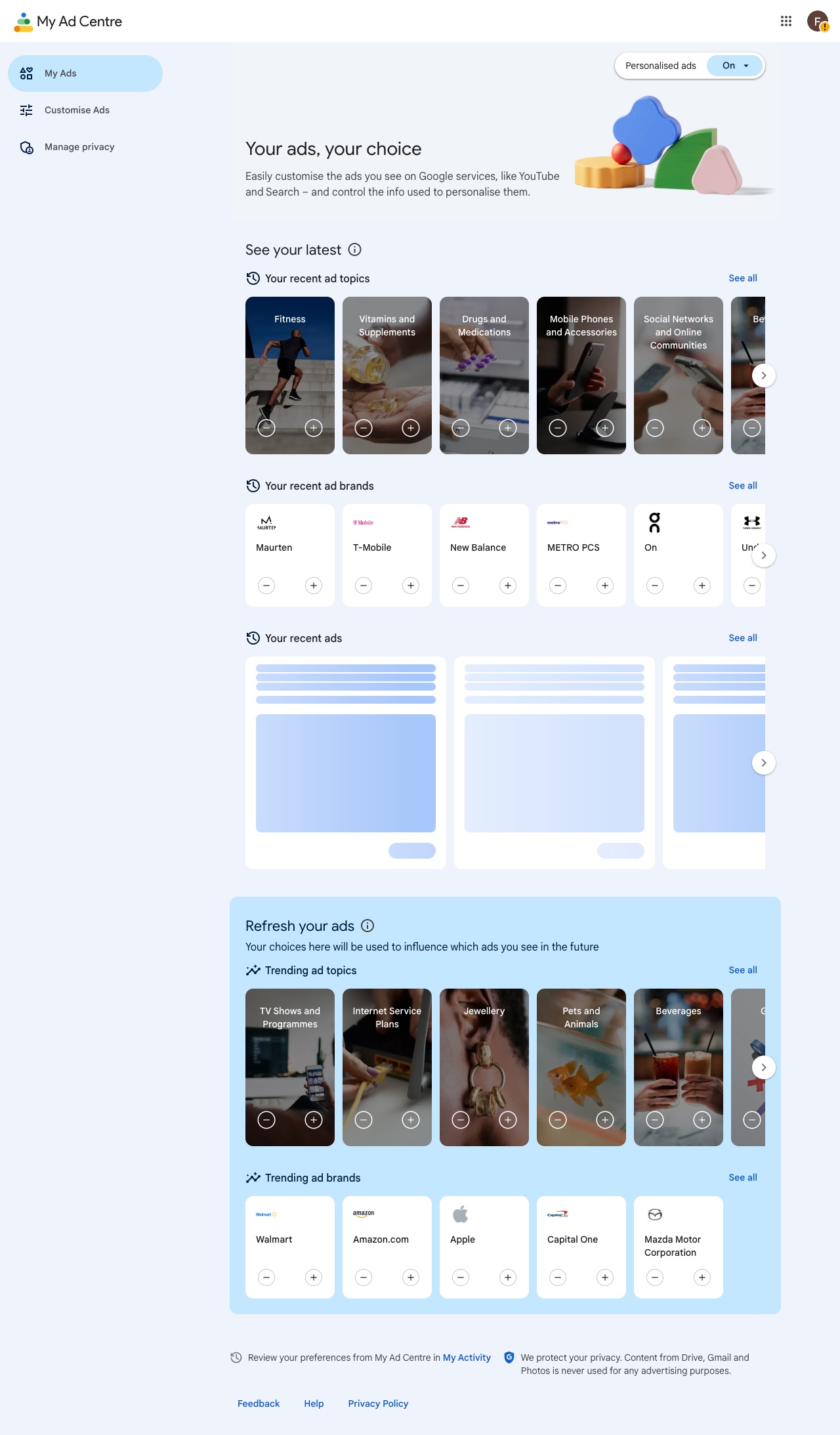
The brand thing was weird. I expected generic categories like "fitness" or "fishing." Instead, Google assigned brand names. The fitness account got ASICS. Maurten. maurten.com. Vitamins and Supplements. Google's ad profile isn't about who you are. It's about what they think they can sell you.
The fitness account's page also showed an ad for "Try ChatGPT now". Make of that what you will.
Some sites fought back. A handful of fitness sites blocked the residential proxy. Not a big deal, plenty of others worked. But worth noting that some publishers are actively trying to prevent automated visits, even from IPs that look residential.
And then there's the control.
21 items on Day 0. 21 on Day 1. 21 on Day 2. 21 on Day 3. 21 on Day 4.
Not one change. Not a single item added or removed across five full days. Zero drift. An idle Google account's ad profile is completely frozen. This is the most important number in the whole experiment, because it proves that every change in the fisherman and fitness accounts was caused by the browsing sessions. There's no background process updating profiles on its own. If you don't browse, your profile doesn't move.
By Day 4, the fisherman had gone from 19 items on its Ad Center page to 45, more than double. The fitness account went from 21 to 56. The control sat at exactly 21 for five straight days.
Beyond the ad profile
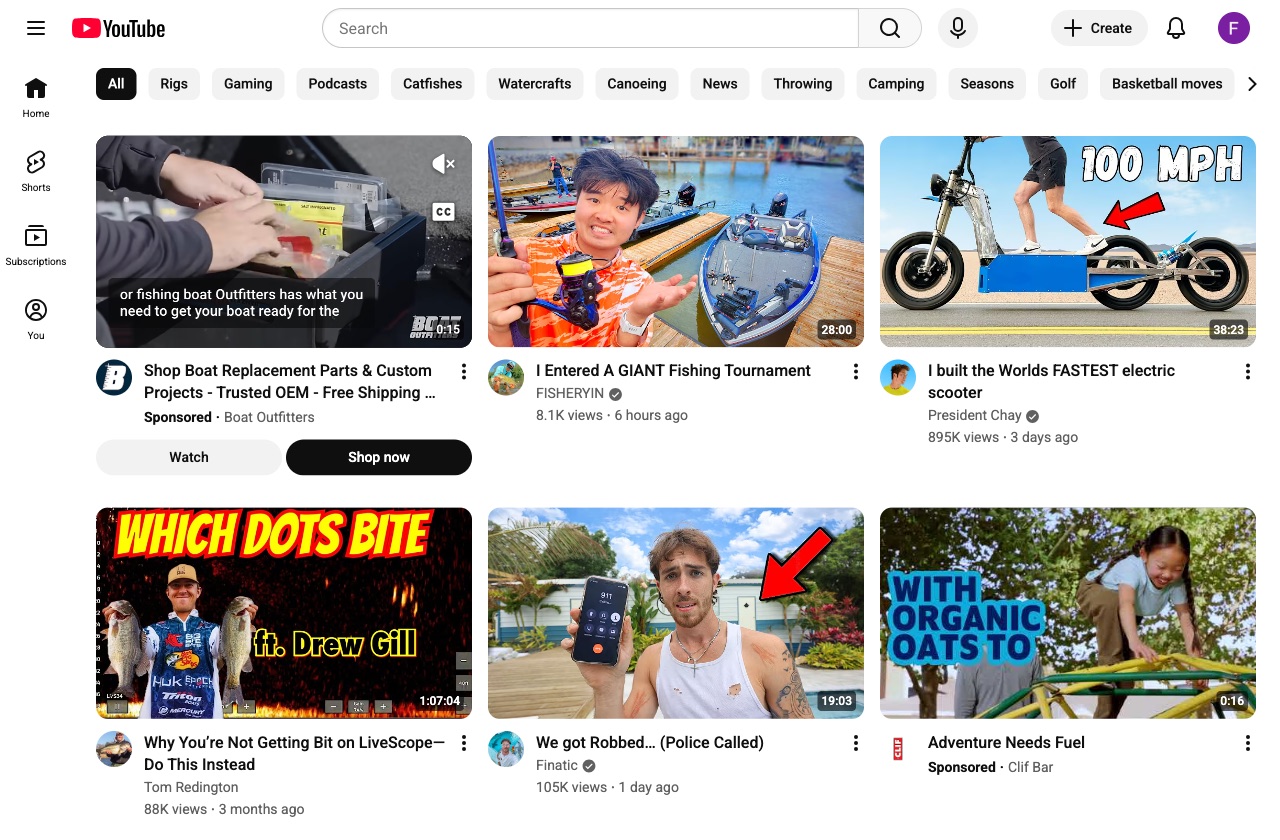
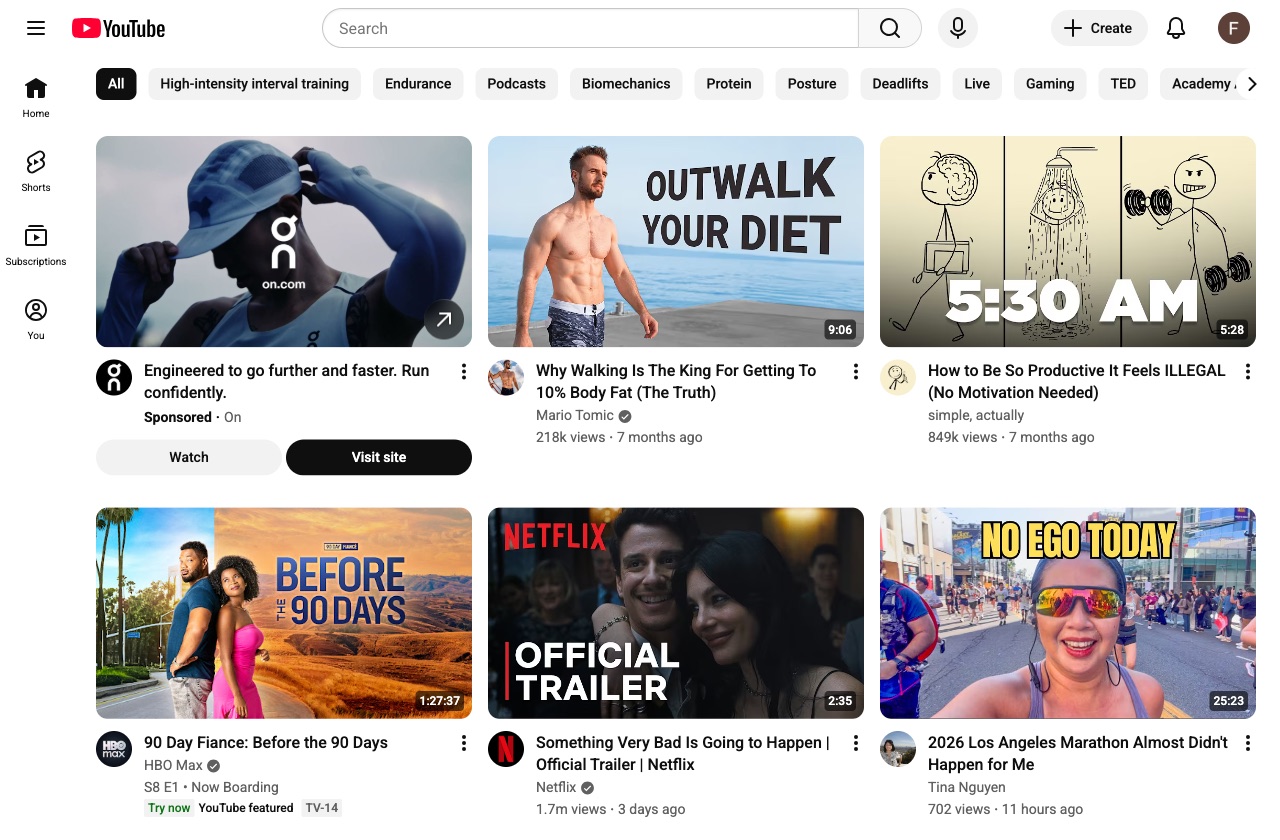
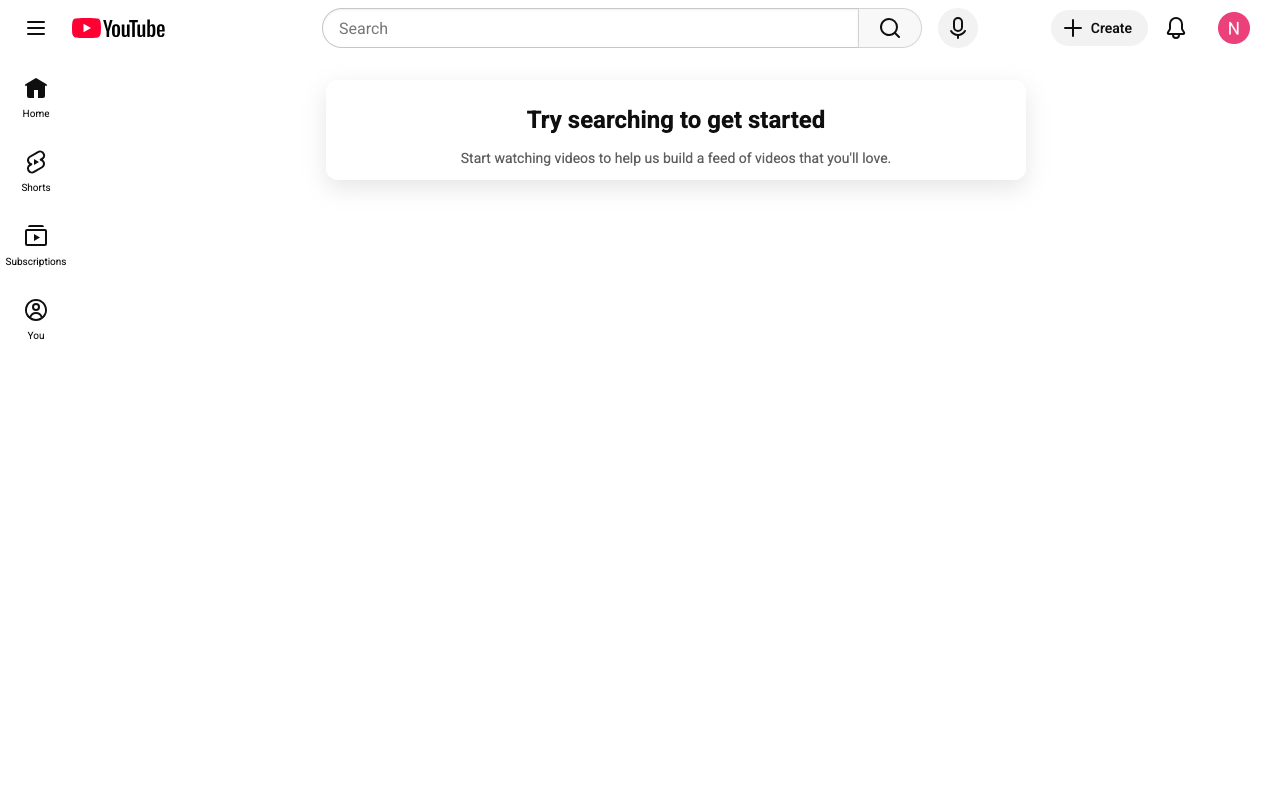
The Ad Center page is what I could count, but they're not the whole picture. By Day 3, YouTube's recommendations had completely shifted for both accounts. The fisherman's YouTube homepage was all bass fishing tutorials, tackle reviews, and lake footage. The fitness account was getting served marathon training plans and supplement reviews. The control's YouTube homepage stayed generic trending content.
The shopping platforms responded too. Amazon's "recommended for you" started reflecting the browsing personas. Temu's homepage reshuffled around the activity. These platforms are all drinking from the same behavioral signals, and they all react fast.
This isn't just about ads. It's about what content you get shown, what products get pushed at you, what version of the internet you experience. The ad profile is just the part Google lets you see.
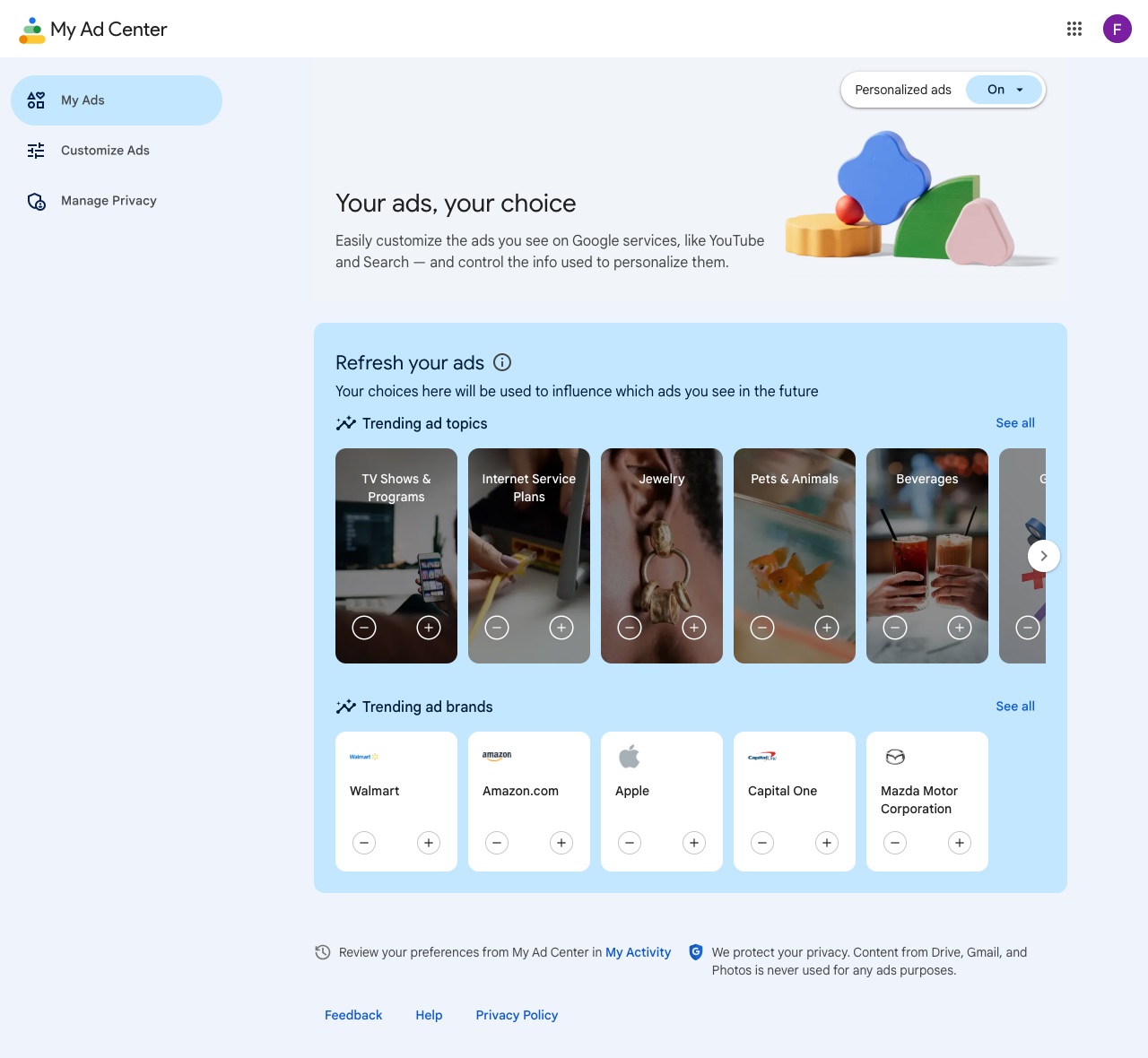
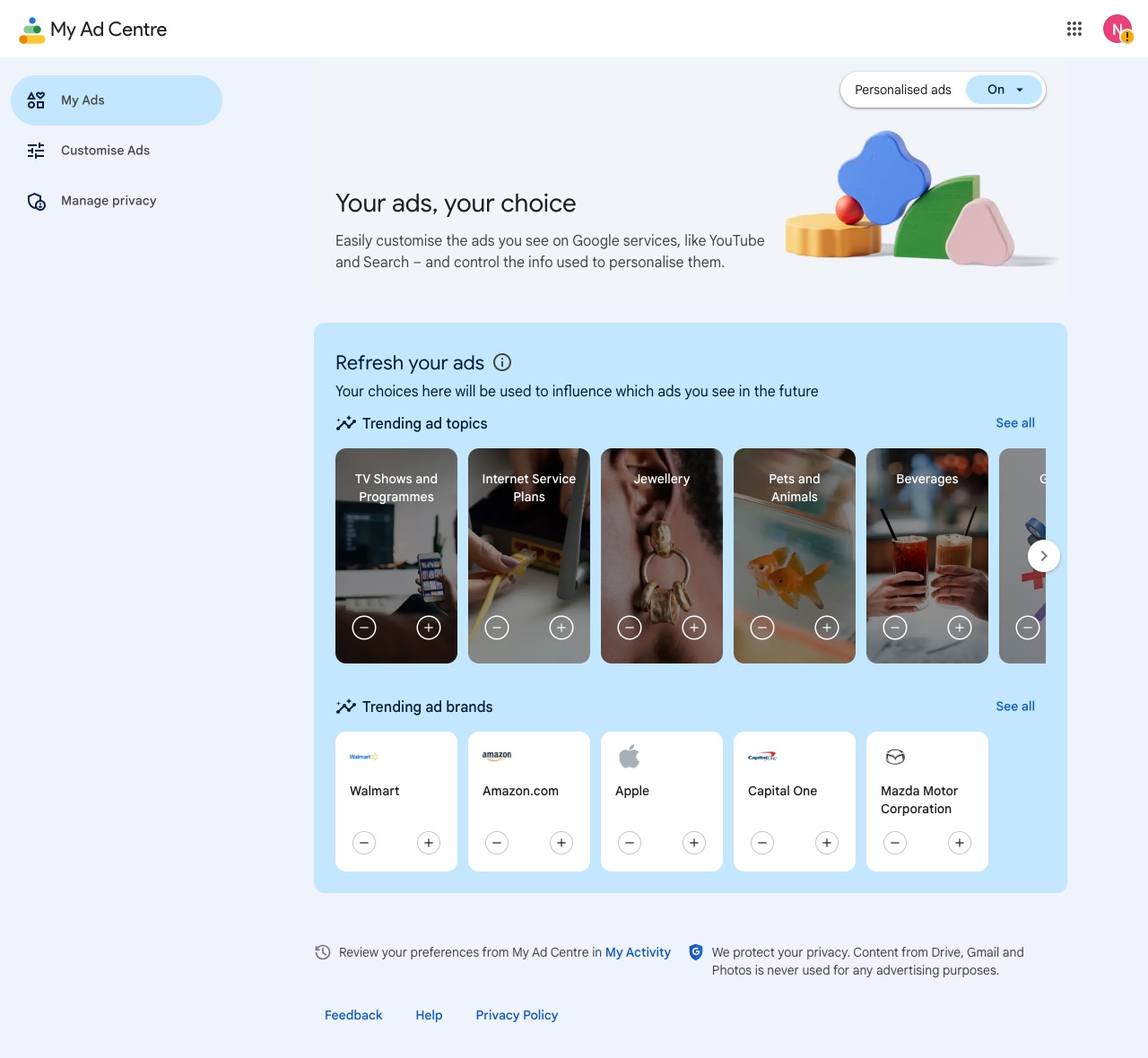
Here's the fisherman's Google Ad Center before the experiment vs after Day 4:
And the fitness account's Ad Center after Day 4. Different persona, completely different profile:
The control account? Identical to Day 0. Nothing moved.
YouTube was even more striking. The fisherman's homepage after five days was wall-to-wall fishing content. Bass fishing tutorials, tackle reviews, lake footage, tournament coverage.
The fitness account's YouTube was all workout videos, meal prep, and body composition content.
The control's YouTube homepage? Completely empty. YouTube literally had nothing to recommend.
What this actually tells you
A few things stood out.
Google is shockingly responsive. One session added 17 new items to an account's Ad Center page. You go read a few articles about running shoes on a Tuesday afternoon and by Wednesday your profile looks like a different person.
The algorithm doesn't just add. It removes and replaces. Your profile isn't accumulating like a pile. It's being sculpted. Google is making active decisions about what to keep and what to discard, every single day, based on what you do.
The control proves this isn't random. An account that doesn't browse doesn't change. Period. Every shift in the active accounts was a direct response to the browsing behavior we injected.
And crucially, the reshaping is malleable. If five days of automated browsing can transform an ad profile beyond recognition, then the profile Google has built about you right now is not some permanent record. It's a living thing that responds to behavior. Which means you can change it.
Now think about your real Google account. The one you've been using for years. Every search, every YouTube rabbit hole, every late-night impulse click. Google is doing this to your profile every single day. Adding interests, removing them, recategorizing you. And unlike my experiment, you don't get to see a before-and-after diff. You just get a feed that feels increasingly like it was built for someone you don't quite recognize.
The filter bubble isn't a metaphor. It's a database entry that gets rewritten every time you open your browser.
Why I ran this experiment
I've been building a tool called MirrorMask. It's a Mac app that does exactly what these test accounts did, except it runs against your real profiles on Google, YouTube, Facebook, Reddit, Amazon, and Temu. You pick a persona, a fisherman or a fitness nut or a birdwatcher or whatever you want, and it browses as that person while you sleep. Real Chrome sessions, real searches, real video watching, real shopping. The algorithms update.
I ran this experiment because I wanted proof that the approach actually works. Not "trust me" proof. Real data. Controlled conditions. A proper baseline.
The data says it works. Five days of automated browsing reshaped two ad profiles beyond recognition while the control didn't budge.
See it happen on your own profile
MirrorMask is a native Mac app. Pick a persona, let it browse, watch your feeds and ads shift. Free 7-day trial, no credit card, no sign-up.
Download MirrorMaskMethodology
For the technically curious.
- Machine: Older MacBook Pro, dedicated test runner. Not my daily driver.
- Proxies: IPRoyal static residential. Three different US cities (Mesa AZ, West Rancho Dominguez CA, Charlotte NC). All verified to resolve to different IPs before the experiment started.
- Browser: Chrome 145, automated via Playwright. Each account in its own isolated profile.
- Daily routine: Google searches, YouTube video watching, website visits, Amazon and Temu browsing. Then count the items on each account's Google Ad Center page.
- Account demographics: All three accounts set to born 1990. Personalized ads enabled on all three.
- Control protocol: Account created, logged in, never used. Scraped daily alongside the others.
- Duration: 5 days of active sessions (Day 0 through Day 4), plus a baseline scrape before any browsing began.